

It's the question we get most often, usually in the very first email: "Should we see the gorillas in Uganda or Rwanda?"
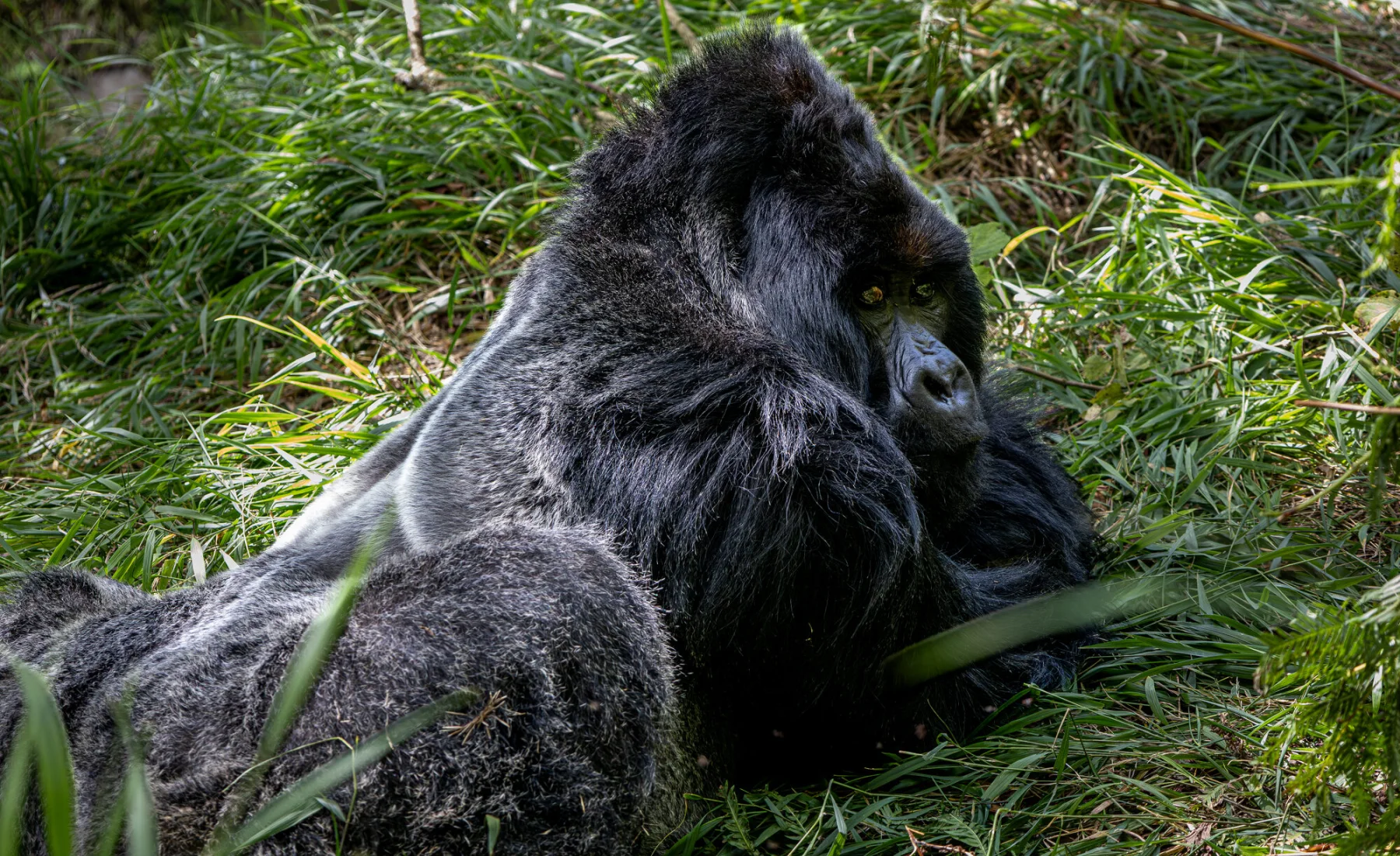
The honest answer is that the gorillas don't know which side of the border they're on. The mountain gorillas of Bwindi and Mgahinga in Uganda and those in Volcanoes National Park in Rwanda are the same species, living in the same highland forests. Your hour with them will move you just as much in either country. What changes is everything around that hour: what you pay, how hard you walk, how far you drive, and what else your trip can include.
Here's how we talk guests through it.
The permit price is the biggest difference
As of late 2026, a gorilla trekking permit for foreign non-resident visitors costs USD 800 in Uganda and USD 1,500 in Rwanda. For a couple, that's USD 1,400 apart before you've booked a single night.
Uganda Wildlife Authority has also announced discounted low-season permits for April, May and November, at USD 600 for foreign non-residents. Those months are wetter, but the forest is at its greenest, the lodges are quieter and the gorillas are still there. If your dates are flexible, ask us whether your month qualifies.
Permit fees are set by the wildlife authorities in each country and can change at any time. On our tours the permits are included in the price, and we confirm the current rate when we quote.
What the hour itself is like
The rules are almost the same in both countries. Up to eight visitors are assigned to one habituated gorilla family. You meet the rangers early for a briefing, walk into the forest behind trackers who left at dawn to find the family, and once you reach them you have one hour. Trekkers must be at least 15 years old.
Uganda has one option Rwanda doesn't: the Gorilla Habituation Experience in Bwindi. You spend up to four hours with a family that is still getting used to people, alongside the researchers and trackers doing that slow work. It costs USD 1,500, very few permits are issued each day, and it books out early. For photographers, or anyone who knows one hour won't feel like enough, it's the best gorilla day in Africa.
The hike: different forests, different kinds of hard
Bwindi earns the "Impenetrable" in its name. Trails are narrow, muddy and often steep, through thick forest where you rarely see far ahead. A trek can take an hour or most of the day, depending on where the family slept the night before.
In Volcanoes you start by walking through farmland, then climb into bamboo and open forest on the slopes of the volcanoes. You're at higher altitude, so the air is thinner, but the walking is often more open than in Bwindi.
In both parks the rangers try to match families to visitors. If fitness or knees are a worry, tell us honestly how you walk, and your guide will speak to the rangers at the morning briefing.
What to bring on trek day
Waterproof hiking boots that are already broken in. New boots and steep mud are a bad mix.
Long trousers tucked into your socks and a long-sleeved shirt. Stinging nettles and safari ants are part of the forest.
Cheap garden gloves for grabbing vines and branches.
A light rain jacket, even in the dry season.
Two litres of water and the packed lunch your lodge will prepare.
A porter. Hire one even if your bag is light. They'll carry it, give you a hand on slippery slopes, and the fee goes straight to families who live around the park.
With the gorillas: keep at least seven metres back, no flash, and follow your ranger. If a young gorilla walks towards you, stay still and let the ranger guide you back. It happens more often than you'd think.
Getting there: Rwanda is closer
Volcanoes National Park is about two and a half to three hours by road from Kigali airport, on good tarmac. You can land, trek the next morning and be back in Kigali the evening after. For short trips, that's Rwanda's big advantage.
Bwindi takes more getting to. From Entebbe it's a long day on the road, roughly eight to ten hours, or a short domestic flight to the Kihihi or Kisoro airstrips. Many of our guests fly into Kigali instead and drive across the border to Bwindi's southern sectors in four to five hours, border crossing included. That gives you Uganda's permit price with a much shorter transfer.
What else your trip can include
This is where Uganda pulls ahead for most first-time visitors. In one trip you can add chimpanzee trekking in Kibale Forest, boat cruises on the Kazinga Channel and the tree-climbing lions of Ishasha in Queen Elizabeth, the Nile and Murchison Falls, rhino tracking at Ziwa, and walking safaris among zebra at Lake Mburo. That's a primate trip and a classic savannah safari in the same country.
Rwanda is smaller and very easy to get around. Alongside the gorillas you can track golden monkeys in Volcanoes, walk Nyungwe's canopy walkway and look for chimpanzees there, and see big game in Akagera. Kigali itself is clean, calm and worth a day, and the Genocide Memorial is something every visitor should make time for.
So which should you choose?
Roughly, this is how we advise:
Choose Rwanda if you have three or four days, want the shortest transfers and a wide choice of top-end lodges near the park, and the permit price isn't what decides it.
Choose Uganda if you have a week or more, want chimpanzees and big game as well as gorillas, or want your budget to go further.
Do both if you can. Flying into Kigali, trekking in Volcanoes, then crossing into Bwindi for a second trek is one of our favourite routes. Two forests, two families, and the second hour often means more than the first because you already know what to watch for.
Still not sure? Send us your dates, how many days you have and how you like to travel. We plan and guide these trips ourselves, and we'll tell you honestly which side of the border suits you best.